

- by Admin
Portable Shade That Makes Beach Days Better
- by Admin
By noon, the beach can go from perfect to punishing. The sand is hot, the sun feels relentless, and suddenly the best spot on the shore is the one with coverage. That is where portable shade stops feeling like a nice extra and starts feeling like the gear that saves the day.
For families, surfers, couples, and anyone who plans to stay outside longer than a quick dip, the right shade setup changes everything. It gives you a place to cool off, stash snacks, protect kids, and take a break without packing up early. And when it is easy to carry and quick to set up, you are far more likely to actually bring it.
A lot of beach gear falls into the category of comfort upgrade. Portable shade is different. It affects how long you can stay outside, how comfortable everyone feels, and how much effort the day takes.
At the beach, at the park, or on a sideline, direct sun wears people down fast. Kids get cranky. Towels heat up. Drinks get warm. Even a great day starts to feel shorter than it should. A shaded basecamp gives everyone a reset point, and that makes the entire outing easier.
There is also the sun protection side of the equation. Sunscreen matters, but it is not the whole story. Reapplying takes discipline, coverage gets missed, and not everyone wants to sit in direct sun for hours. A portable shade setup adds another layer of protection without asking much from you once it is in place.
Not all shade is created equal. Some setups look great in product photos and become a headache the first time wind picks up or the first time you have to carry them across a parking lot with a cooler in one hand and a bag in the other.
The best portable shade balances four things well: protection, portability, setup speed, and stability. Miss one of those, and the whole experience changes.
If your shade system is bulky, awkward, or heavy, you will start leaving it behind. That is usually the first dealbreaker for casual outdoor use. Most people are not heading out for a gear test. They want something they can toss in the car, carry to the sand, and set up without turning arrival into a workout.
Lightweight materials matter, but so does how the system packs down. A compact carry bag, simple parts, and a shape that fits easily in a trunk all make a real difference.
Nobody wants a 30-minute assembly project in the sun. Good portable shade should feel approachable, even if you are setting it up solo or juggling kids, chairs, and beach bags.
Fast setup is not just about convenience. It also means less frustration when conditions are less than ideal. If wind is moving, or the beach is crowded, simple setup becomes a major advantage.
Shade is only useful if it actually protects. That means enough coverage for your group and material that helps block harmful rays, not just something that creates a little patch of shadow.
This is where UPF-rated fabric stands out. It is a practical feature, not marketing fluff. If you are going to rely on your shelter for hours outside, the fabric should be doing real work.
The beach is rarely gentle on gear. Wind, shifting sand, salt, and repeated use expose weak designs quickly. A good portable shade system should feel stable when anchored properly and durable enough to survive more than a few weekends.
That does not mean every setup is right for every condition. A lightweight shade built for easy family beach days may not be the best choice for extreme wind. The key is choosing for your actual use, not the most dramatic scenario you can imagine.
Portable shade shows up in a few common forms, and each one works better for certain plans than others.
Umbrellas are familiar and compact, but they can be limited on coverage and less forgiving in wind. If you are shading one chair and staying put for a short stretch, that may be enough. If you want room for kids to play, bags to stay cool, and multiple people to sit comfortably, they can feel small fast.
Pop-up canopies offer more structure and roomy coverage, but they are usually heavier and less beach-friendly. They make more sense for sidelines, backyard use, and events where transport is easier and setup space is predictable.
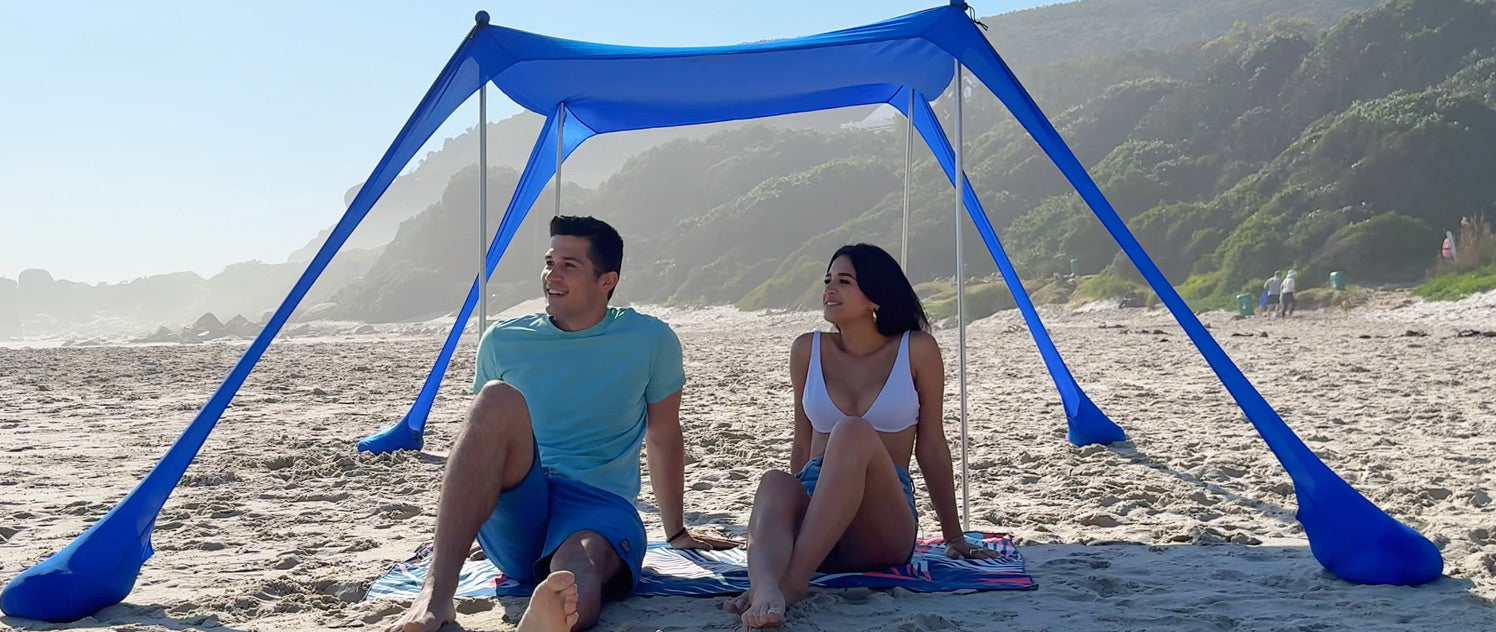
Beach shelter systems land in the middle in a very smart way. They are built specifically for soft ground, direct sun, and easy transport. For many beachgoers, that balance is the sweet spot. You get meaningful coverage without dragging around something oversized.
The right pick depends on who is coming, how long you will stay, and how much gear you are already carrying.
If you usually travel light, smaller shade formats make the most sense. You want enough room to sit, stash a bag, and cool off between swims without carrying more than you need. Compact systems are easier to pack for quick getaways and vacation travel too.
This is where size matters most. Families need space for snacks, towels, toys, naps, and the general chaos that comes with a longer beach day. A shade setup that looks roomy for two adults can feel cramped once children and gear enter the picture.
Going a little bigger usually pays off. The extra room helps everyone stay comfortable, and it gives you more flexibility as the day changes.
If your shade is going beyond the beach, think about versatility. Parks, lakes, and sports sidelines all ask for slightly different things. You may want a system that is still lightweight but adaptable enough for different surfaces and different group sizes.
This is often where buyers get the most value - one portable shade solution that works across a full summer instead of a single type of outing.
This is the part shoppers often overlook. Big claims get attention, but the small usability details tend to decide whether you love your setup or tolerate it.
A well-designed carry bag matters. So do materials that dry reasonably well after a damp morning or a splashy afternoon. The anchor system matters too, especially at the beach where setup confidence can make or break your first impression.
Then there is visual simplicity. Outdoor gear should not feel intimidating. When a shade system looks easy to understand, people use it more often. That sounds obvious, but it is one of the reasons streamlined shelter systems stand out in real life.
People often shop shade by asking what offers the most coverage or the strongest frame. Those are fair questions, but convenience is what usually decides long-term satisfaction.
If it is quick to carry, quick to pitch, and quick to pack away, it becomes part of your routine. That is what turns a product into a favorite. A complicated setup with great specs can still lose to a simpler one that gets used every weekend.
That is also why portable shade fits so well with the rest of a beach-day kit. It works best when the whole setup feels easy: your chairs are light, your cooler is manageable, your towels dry fast, and your shelter gives you a reliable place to land. Sun Ninja has built a lot of its outdoor gear around that exact idea - less hassle, more time actually enjoying the day.
Portable shade is not just about blocking sunlight. It is about creating a better outdoor experience from the moment you arrive. You stay longer. You feel better. Kids melt down less. Lunch tastes better in the shade than in full sun, and the whole day feels more relaxed.
That is the difference people remember. Not the pole design or the fabric weight on a spec sheet, but the fact that everyone wanted to stay for one more hour.
If your beach days, park hangs, or weekend trips tend to revolve around finding relief from the sun, portable shade is one of the smartest upgrades you can make. Choose the setup that fits your crew, your pace, and your kind of adventure - then let the sun be part of the day, not the reason it ends early.
Share:
Best Changing Mat for Beach Days
Beach Tent vs Umbrella: Which Works Best?