

- by Admin
Beach Tent vs Umbrella: Which Works Best?
- by Admin
That first hour at the beach usually decides how the whole day goes. If your shade setup is flimsy, crowded, or constantly blowing sideways, relaxing gets replaced by babysitting gear. When people compare beach tent vs umbrella, they’re really asking a bigger question: what makes a beach day easier, cooler, and more comfortable from arrival to sunset?
The short answer is that both can work, but they solve different problems. An umbrella is the classic grab-and-go option for light shade and short stays. A beach tent is the better choice when you want more coverage, more stability, and a setup that feels like a real home base instead of a pole in the sand.
The biggest difference comes down to coverage and control. A beach umbrella creates a circle of shade that shifts as the sun moves. That can be enough for one or two adults who don’t mind adjusting their chairs every so often. It’s simple, familiar, and usually compact.
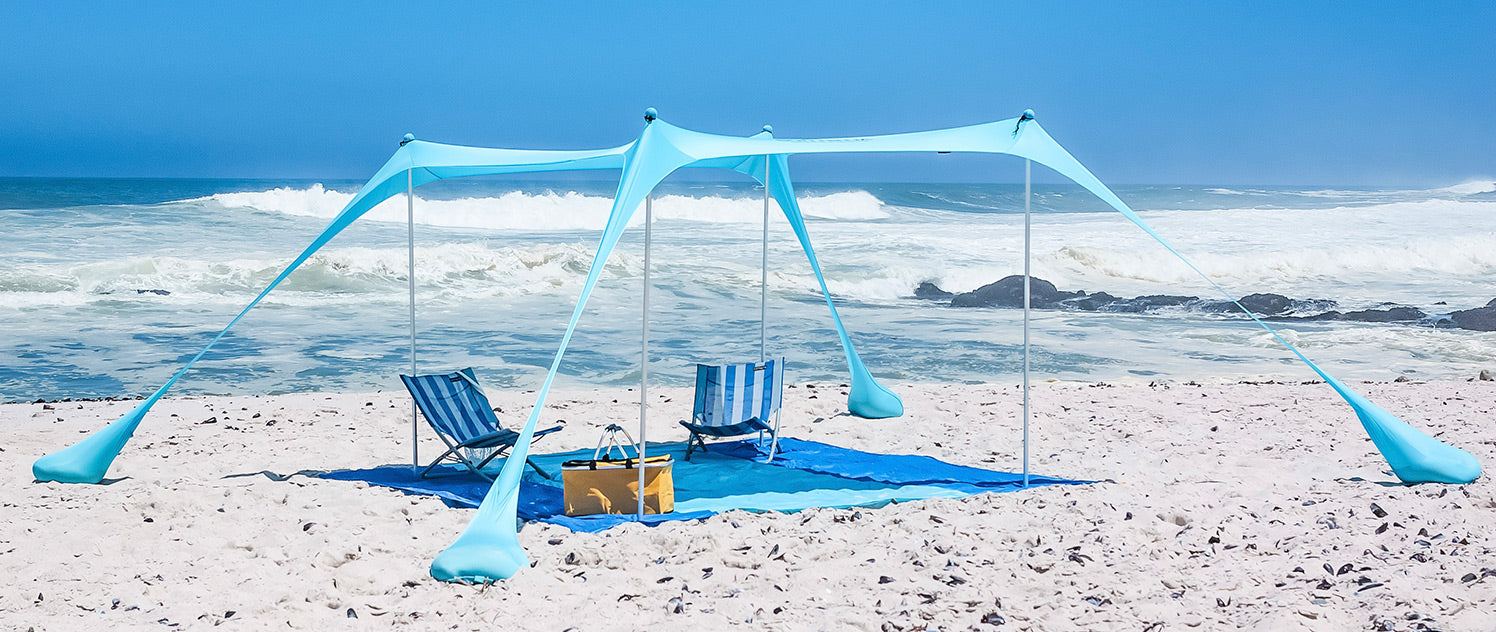
A beach tent creates a larger shaded zone with more usable space underneath it. Instead of chasing a patch of shadow, you get room to sit, stretch out, stash bags, and keep kids out of direct sun for longer stretches. If your beach days involve towels, toys, snacks, coolers, and people who don’t sit still, that extra space matters fast.
This is why the beach tent vs umbrella debate is less about which product is “better” and more about what kind of day you’re planning. Quick solo trip? Umbrella can be enough. Full family outing or all-day stay? A tent usually earns its spot.
Not all shade feels the same once you’re on hot sand for hours. An umbrella gives overhead coverage, but the sun doesn’t stay overhead. Morning and late afternoon light can sneak in from the sides, which means your shoulders, legs, face, and gear still take a hit.
A beach tent helps create a broader protected area, especially when designed for sun coverage instead of just acting like a basic canopy. That’s a big win for parents with little kids, anyone with sensitive skin, and beachgoers who don’t want to reapply sunscreen every five minutes just because the shade keeps moving.
For many shoppers, this is where the decision gets easier. If sun protection is the priority, a well-designed beach tent usually gives you more consistent relief than an umbrella.
A two-hour beach stop and a six-hour beach day are completely different experiences. On a short visit, an umbrella may feel totally fine. On a longer stay, people start wanting a place to cool off, snack, nurse a baby, change a shirt, or let a toddler rest without baking in full sun.
That’s where a tent starts pulling ahead. It turns a stretch of sand into a usable hangout zone. You’re not just blocking sunlight. You’re creating comfort, and comfort is what keeps everyone in a good mood.
Most beach shelter decisions sound easy until the wind picks up.
An umbrella can be great in calm weather, but beaches are rarely that cooperative. A gusty afternoon can turn a poorly secured umbrella into a constant problem. Even when it stays put, the canopy often tilts, flaps, or loses its best angle, which means less reliable shade and more adjusting.
A beach tent built for sandy conditions is usually the stronger play in breezy environments. Anchored properly, it tends to feel more stable and less fussy throughout the day. That stability is a huge quality-of-life upgrade. You spend less time troubleshooting and more time actually enjoying the beach.
Of course, setup still matters. Any shelter is only as good as the way it’s secured. But if your local beach is known for regular wind, a tent is often the less stressful option.
A lot of people assume umbrellas always win on convenience, and sometimes they do. Push it into the sand, open it up, and you’ve got instant shade. That’s appealing, especially for quick outings.
But speed is only one part of convenience. The other part is how much effort the shelter needs after setup. If you’re constantly rotating an umbrella, resetting the pole, or watching it every time the wind shifts, that simplicity fades.
A good beach tent may take a little more intention upfront, but the payoff is less hassle later. Once it’s set, your day tends to stay on track. That’s especially true for families who already have enough to manage between bags, drinks, sunscreen, and sandy kids.
Modern portable beach shelters have also changed the equation. Lightweight materials, travel-friendly carry options, and simpler anchoring systems make tents far more approachable than the bulky versions people may remember.
If you walk a long distance from the parking lot, every pound counts. Umbrellas often feel easier because they’re narrow and familiar to carry. For minimalists, that can still be a real advantage.
But portability is not just about shape. It’s also about what one item replaces. If a beach tent gives you shelter, gathering space, and better protection in one system, it may actually simplify the loadout. Instead of piecing together shade solutions and extra accessories, you start with a stronger base camp.
That’s why portable shelter brands like Sun Ninja resonate with beachgoers who want the beach to feel easier, not more complicated. The goal isn’t to bring more stuff. It’s to bring smarter stuff.
An umbrella still makes sense for a lot of beach days. If you usually head out solo, travel light, and stay for a shorter window, it can absolutely do the job. It’s also a reasonable pick for adults who mostly want overhead shade while sitting in beach chairs and don’t need much covered space beyond that.
Umbrellas are also good for low-commitment outings. If you’re popping over for sunset, reading for an hour, or spending most of your time in the water, a full shelter may feel unnecessary.
The trade-off is that an umbrella gives you less flexibility. It protects a smaller area, handles changing sun less effectively, and may require more attention in the wind.
A beach tent is usually the better fit for families, groups, and anyone planning to settle in for the day. It’s especially useful if you’re bringing children, snacks, extra bags, or gear that shouldn’t sit in direct sun the whole time.
It also makes sense for beachgoers who care about comfort as much as convenience. If you want room to relax, regroup, and actually enjoy your setup instead of working around it, a tent has a clear edge.
This is also the stronger option for people who treat beach days as repeat events, not once-a-year vacations. When you go often, the little frustrations of weaker shade add up. More coverage, more stability, and more usable space become worth it fast.
Families tend to feel the difference immediately. With an umbrella, everyone starts close together and then slowly spreads beyond the shaded area. Someone’s legs are in the sun, someone’s snack bag is heating up, and someone else is trying to nap with bright light hitting half their face.
With a beach tent, the setup feels more organized from the start. There’s a defined shaded area for kids to play, parents to sit, and bags to stay protected. That kind of structure helps the whole day run smoother.
It’s not just about comfort, either. It’s about reducing friction. Fewer complaints, fewer adjustments, fewer moments where you wonder if it would’ve been easier to stay home.
If you want the most basic shade option for short, light, low-wind outings, an umbrella can still be the right call. It’s simple and familiar, and for the right beach trip, that’s enough.
If you want more reliable sun coverage, better wind performance, more room, and a setup that supports a full beach day, a tent is usually the smarter choice. It asks a little more from your setup, then gives a lot more back in comfort and usability.
The best beach shelter is the one that matches the way you actually spend your time outdoors. If your goal is to show up, settle in, and enjoy the day with less hassle, more shade usually wins. Choose the setup that lets you stop managing your shelter and start enjoying the beach.
Share:
Portable Shade That Makes Beach Days Better
UPF 50 Sun Protection Guide for Beach Days