

- by Admin
How to Anchor Beach Shade Properly
- by Admin
That perfect beach setup can go sideways fast when one gust turns your shade into a giant kite. If you want to anchor beach shade properly, the goal is simple: create a setup that stays put in soft sand, handles changing wind, and keeps everyone underneath it comfortable instead of scrambling.
The good news is that beach shade is not hard to secure when you understand what the sand, wind, and canopy are doing. A lot of shaky setups come down to the same few mistakes - shallow anchors, loose lines, poor wind direction, or not adding enough tension after the sand shifts. Get those right, and your shade goes from flimsy to reliable.
The beach looks easy, but it is one of the trickiest places to set up shelter. Sand moves. Wind changes direction. Dry top-layer sand has less holding power than packed sand a few inches down. And unlike grass or dirt, you cannot count on firm ground to keep poles and stakes stable.
Most beach shades fail for one of two reasons. Either the anchors do not have enough resistance in the sand, or the canopy catches more wind than the setup can handle. Sometimes both happen at once. That is why the best setup is not just about sticking something into the ground. It is about balancing anchor depth, line tension, pole angle, and canopy orientation.
Before you even fill an anchor bag or tension a line, pick the right spot. Look for a section of beach that is above the high-tide line, away from steep drop-offs, and not directly in the strongest wind funnel between dunes, buildings, or parked vehicles. If the sand is slightly more compact, that helps too.
Next, face the lowest, most secure side of your shade toward the wind when possible. That reduces lift. If the broadest side of the canopy is taking a direct gust, the whole structure has to work much harder.
Once you lay out your shade, spread the anchor points fully. Crowding the corners too close together makes the shelter taller and less stable. A wider footprint usually gives you a stronger hold, especially on breezy days.
A common mistake is relying on shallow stakes or lightly filled sand pockets. On the beach, surface sand is the weakest part. To get a real hold, you need volume and depth.
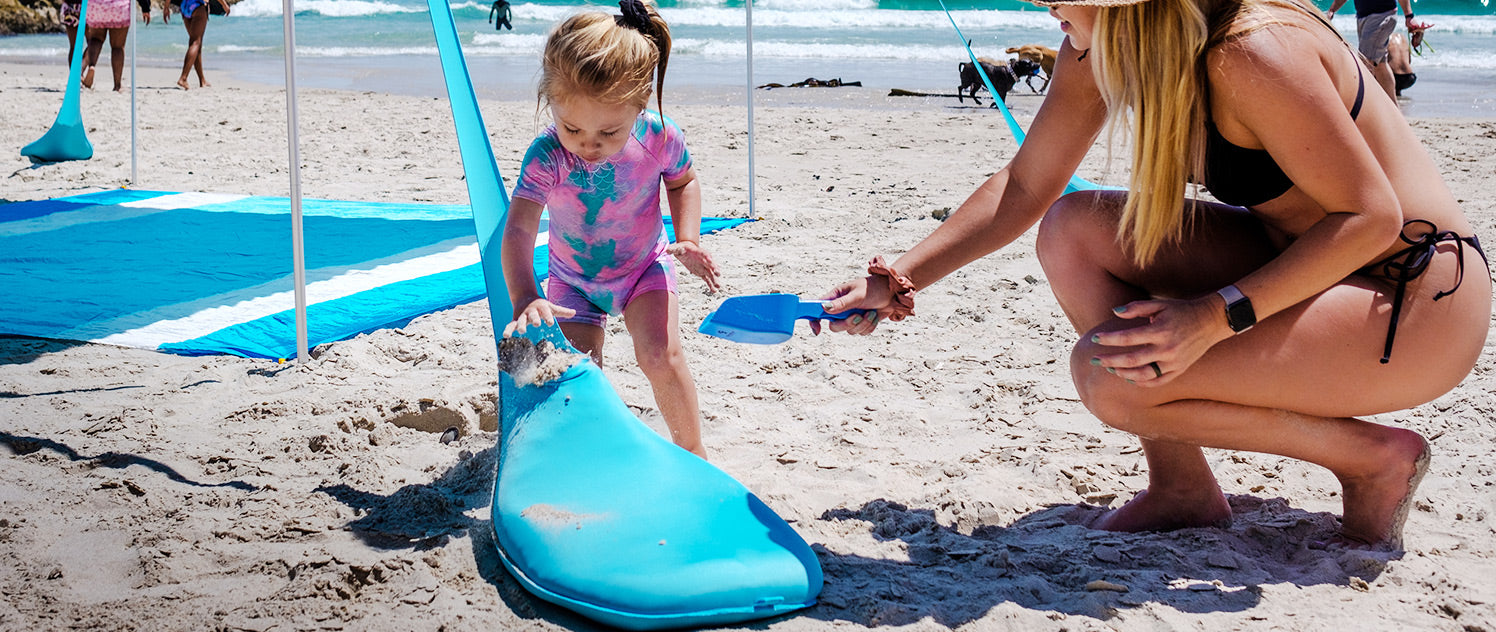
If your shade uses sandbags or anchor bags, fill them generously. Underfilled anchors are one of the biggest reasons a beach canopy shifts or collapses. Burying or nestling the filled anchors into deeper sand adds even more resistance. If your setup uses stakes, drive them in at an angle rather than straight down, and bury them deep enough that they are working against compacted sand, not just loose grains on top.
The main rule is straightforward: the stronger the wind, the more sand mass and anchor depth you need. A setup that feels secure at 9 a.m. may need retightening by noon when the breeze picks up.
Even strong anchors cannot do much if the lines are slack. The canopy should feel evenly tensioned, not stretched to the point of strain but tight enough that fabric is not flapping wildly.
Flapping is not just noisy. It creates extra force, wears down the material faster, and increases the odds that one side will start pulling loose. After the first setup, walk around the shade and tighten each point gradually. Then check it again after a few minutes. Sand shifts as the load settles, so a second round of tensioning usually makes a big difference.
If you have ever watched one beach shelter stay calm while another twists itself into trouble ten feet away, wind setup is usually the reason. The angle of the canopy and poles affects how air moves over and under the fabric.
A lower profile is generally better in wind. Taller poles may create more headroom, but they also expose more surface area and allow more lift underneath. On calm days, that trade-off may be worth it. On windy days, bringing the setup a little lower often makes it much more stable.
If gusts are strong or inconsistent, it also helps to reposition rather than fight the conditions. Rotating the shelter so the wind hits a narrower edge can reduce stress on the entire system. This is one of those it-depends moments - the ideal angle varies by canopy shape, pole design, and how open the shelter is on each side.
People often blame the product when the real issue is setup. That is actually good news, because setup problems are fixable.
One common mistake is setting the poles first and treating the anchors as an afterthought. It works better the other way around. Build your foundation first, then raise and tension the canopy.
Another mistake is ignoring early warning signs. If one corner starts creeping, if a pole leans, or if fabric starts snapping loudly, the setup is telling you it needs adjustment. Waiting usually makes the fix harder.
Then there is the habit of using the same setup in every condition. Calm morning beach, crowded afternoon shoreline, and breezy open sandbar all call for slightly different choices. You may need lower poles, fuller anchor bags, wider corners, or a different orientation as the day changes.
Soft, dry sand is where weak setups get exposed. The hold is lower, and even well-designed shelter systems need more care. If you want to anchor beach shade properly in these conditions, think wide, deep, and heavy.
Spread the corners farther apart than you would on firmer ground. Fill anchors completely. Bury them deeper if possible. Keep the canopy lower and more aerodynamic. These small changes stack up.
It also helps to avoid setting up on the loosest powdery sand when a slightly firmer patch is nearby. You do not need wet, packed shoreline sand to get a better hold, but a little more density under the surface can make a real difference.
This part matters. Sometimes the smartest move is packing it down.
If your anchors keep pulling despite being fully filled and properly tensioned, or if gusts are strong enough to bend poles hard and repeatedly, conditions may be beyond what your setup should handle safely. Beach shade is meant to make the day better, not create a hazard for your family or everyone downwind.
A confident beach setup includes knowing when to lower the canopy, reset, or call it for the day. No relaxing afternoon is worth chasing gear across the sand.
The easiest way to get a stable setup is to use the same order every time. Lay out the canopy. Position it with the wind in mind. Fill and secure the anchors fully. Raise the poles. Tension the lines. Then walk the perimeter and fine-tune everything.
That routine saves time because it prevents the usual do-overs. It also makes beach days feel lighter. You spend less time wrestling with gear and more time actually enjoying the shade.
Portable systems are especially nice when they are designed for quick setup and easy carry, but convenience only pays off if the shelter stays secure once it is up. That is why brands like Sun Ninja focus so much on portability and simple setup - because beach gear should work with your day, not against it.
A few inches can change everything. Lowering one side slightly, shifting an anchor farther out, topping off a sandbag, or retightening after ten minutes may be all it takes to turn a shaky setup into a solid one.
It is also smart to recheck the shade after lunch, after the tide shifts, or after the beach gets hotter and windier. Conditions evolve. Good anchoring is not a one-and-done step. It is a quick habit that keeps your setup performing the way it should.
The best beach shade setups are not always the most complicated. They are the ones built with a little awareness and a few smart adjustments. When your shelter is low enough, tight enough, and anchored with enough sand to match the conditions, the whole beach day feels easier. More shade, less fuss, and a lot fewer surprise sprints across the sand.
Next time you set up by the water, give yourself an extra couple of minutes at the start. That small effort is usually the difference between a shade that merely stands up and one that truly earns its spot on the beach.
Share:
12 Beach Essentials for a Day Trip
What Size Beach Shelter Do You Need?