

- by Admin
How to Use Portable Shower the Easy Way
- by Admin
A portable shower can turn a messy beach day into an easy one fast. If you have ever tried to brush sand off kids, rinse salt from your hair, or change out of a wet swimsuit in a parking lot, you already know why people search for how to use portable shower setups before their next trip.
The good news is that most portable showers are simple once you understand the basics. You fill them, position them, manage water pressure, and use them with a little more planning than you would at home. The trick is not just getting water to flow. It is using the shower in a way that keeps your day comfortable, your gear cleaner, and your pack-up less chaotic.
Start by choosing the right spot. At the beach, look for flat ground a short walk away from your main setup so you can rinse off without soaking towels, bags, and chairs. At a campsite, pick a stable area with decent drainage and enough room to move around. If privacy matters, set up near a changing tent, poncho, or sheltered side of your vehicle.
Next, fill the shower reservoir. Some portable showers use a hanging bag, while others use a pump tank, battery-powered unit, or foot pump. The fill process depends on the style, but the idea is the same: add clean water, seal it properly, and check that the hose and nozzle are attached securely. Do not overfill if the manufacturer recommends leaving space for pressure or easier carrying.
If your shower uses solar heating, leave it in direct sun before you need it. That can make a big difference after a cold ocean swim. Just keep expectations realistic. On a hot, bright day, the water may warm nicely. On cloudy days or late afternoons, it may stay lukewarm at best.
Once the shower is filled, place or hang it correctly. A gravity-fed shower needs height to create water flow, so you may hang it from a sturdy branch, rack, or portable frame. A pump-style shower usually stays on the ground and builds pressure manually or with a battery. Before anyone gets fully rinsed, do a quick test spray. That helps you check pressure, leaks, and water temperature before you are standing there sandy and shivering.
The biggest mistake people make is treating a portable shower like a full bathroom shower. It is not built for long, high-flow rinses. It is built for quick, useful cleanup.
Use short bursts of water instead of running it continuously. Wet down first, pause to soap up if needed, then rinse. That method stretches your water supply and usually works better for beach use anyway. If your main goal is removing sand and salt, start from the top and work down so you are not pushing grit back onto areas you already cleaned.
Nozzle settings matter too. A gentle spray is good for kids, faces, and quick cool-downs. A more focused stream is better for feet, ankles, beach toys, or stubborn sand stuck behind knees and elbows. If your unit has adjustable pressure, use only what you need. Higher pressure feels better for a moment, but it drains the tank faster.
Water temperature takes a little judgment. If the shower has been sitting in the sun, test it with your hand first. Dark shower bags can heat up a lot in peak afternoon sun. On the other hand, if the water started cold and never had time to warm, it may be fine for rinsing feet but less fun for a full-body wash.
Beach rinsing is where a portable shower really earns its spot in your gear setup. Sand gets everywhere, and once it gets into the car, cooler, towels, and seats, it sticks around.
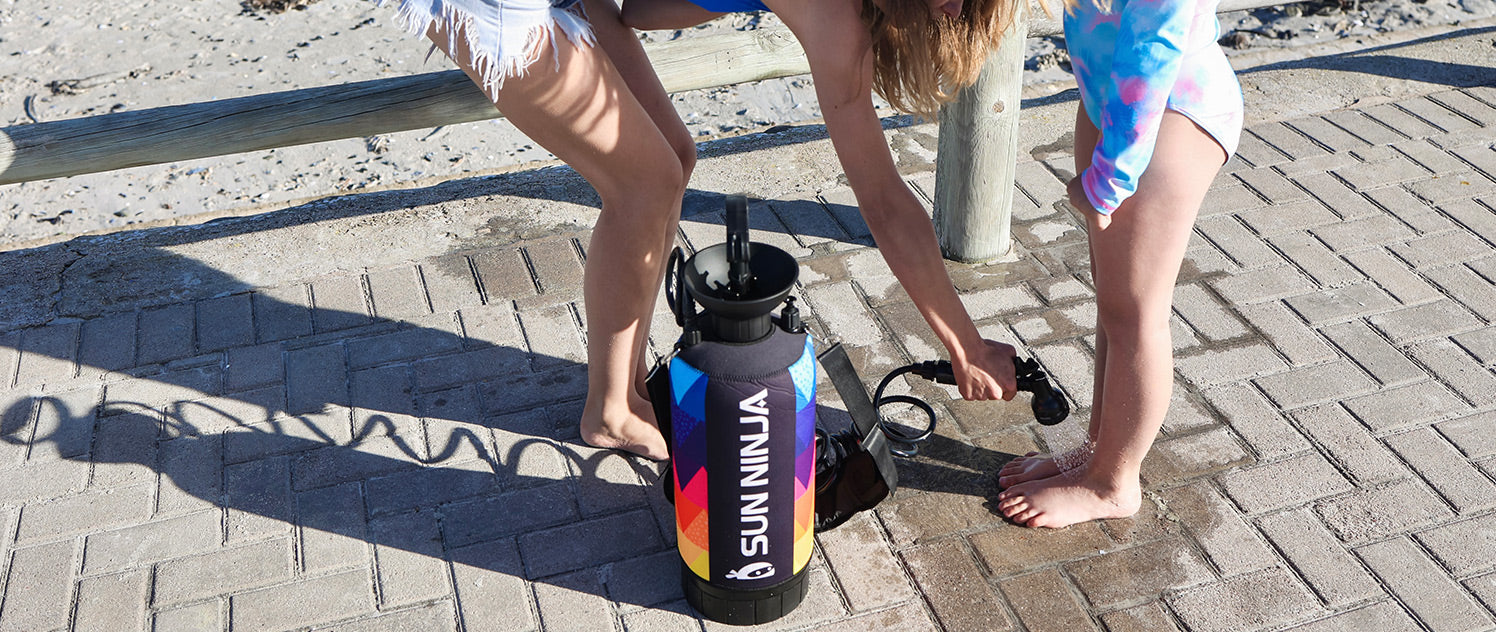
Start with feet and lower legs before anyone climbs onto a mat or into the car. That alone cuts down a huge amount of mess. If kids are involved, rinse hands and legs before snacks or seatbelts. For swimmers and surfers, rinse saltwater from hair, shoulders, wetsuits, and swimsuits while it is still easy to remove.
A changing mat helps here because it gives you a cleaner place to step while rinsing or changing. Pair that with a towel or surf poncho, and the whole process feels a lot less improvised. Instead of hopping around on hot sand trying not to drop clean clothes, you get a simple station for cleanup and changing.
If you are using soap, make sure it is allowed where you are. Some beaches and campgrounds have rules about drainage and personal wash products. Even biodegradable soap is not always appropriate everywhere. For many beach days, a water-only rinse is enough to get rid of salt, sand, and sunscreen residue until you get home.
Family use is less about long showers and more about keeping the day moving. A portable shower is great for quick resets. Rinse sandy feet before lunch. Wash sticky hands after popsicles. Clean off a scraped knee. Cool down a kid who has been running in the sun too long.
For toddlers and younger kids, keep the spray gentle and explain what you are doing before you start. Sudden cold water to the face rarely goes over well. For older kids, make them part of the routine. Once they know where to stand, how to lift their feet, and when to turn around, cleanup gets much faster.
Adults usually need less water than they think. A brief rinse of feet, calves, arms, and swimsuit areas goes a long way. If everyone in the group uses the shower efficiently, one fill can handle more people than expected. If everyone treats it like a spa shower, it will run out fast.
Sometimes the shower is not really about bathing. It is about changing comfortably after the beach, paddleboarding, or a casual outdoor workout. In that case, think of the shower as part of a small cleanup zone.
Use it next to a privacy shelter, behind an open hatch, or with a changing poncho if you want more coverage. A light rinse before changing helps keep dry clothes clean and makes the drive home more comfortable. That is especially helpful after saltwater, lake water, or muddy park days.
Comfort also depends on timing. Rinse before packing everything up, not after. If you wait until bags are zipped and kids are strapped in, the shower becomes one more thing to drag back out. Handle the rinse while the setup is still open and the towels are still accessible.
Most problems come down to setup, expectations, or storage. If the flow is weak, the tank may not be pressurized enough, the bag may not be high enough, or the hose may be kinked. If the water smells off, it was probably left sitting too long. If the shower feels heavy and awkward, it may have been overfilled or carried farther than necessary.
Another common mistake is packing the shower away wet without draining it fully. That leads to mildew, odor, and a less pleasant surprise next time. Empty it, let it air out as much as possible, and store it dry.
It is also worth checking local rules before using your shower in public spaces. Some beaches and campgrounds are relaxed about rinse stations, while others are stricter about where water can drain or where people can change. A portable shower is meant to make the day easier, not create friction with the place you are visiting.
The easiest way to get real value from a portable shower is to stop thinking of it as a backup item. Build it into your beach or camp routine. Set it near your changing area. Keep it close to your towels and mat. Fill it before you need it, not after everyone is already covered in sand.
That is when it starts doing what it does best: cutting down mess, making transitions easier, and helping everyone stay a little more comfortable outdoors. A simple setup can make the end of the day feel almost as relaxed as the start, and that is a win worth packing for.
Share:
Beach Chairs That Make the Day Better
Cooler Backpack vs Hard Cooler: Which Wins?