

- by Rob Cohen
Best Beach Tent for Wind: What to Look For
- by Rob Cohen
A beach tent that looks great in a product photo can turn into a flapping headache the second the afternoon wind rolls in. If you’re shopping for the best beach tent for wind, the real question is not just which shelter provides shade - it’s which one stays put, sets up fast, and still feels easy to carry from the parking lot to the sand.
That matters because windy beach days are not rare. They’re normal. A little breeze feels amazing when you’re sitting under shade with cold drinks and dry towels. The wrong shelter, though, can leave you chasing poles, re-anchoring corners, and wondering why something labeled “beach-ready” can’t handle the beach.
Wind performance usually comes down to design more than marketing claims. A good beach shelter needs to work with the environment, not fight it. That means broad, stable anchoring points, fabric that stays tensioned, and a shape that doesn’t act like a giant sail.
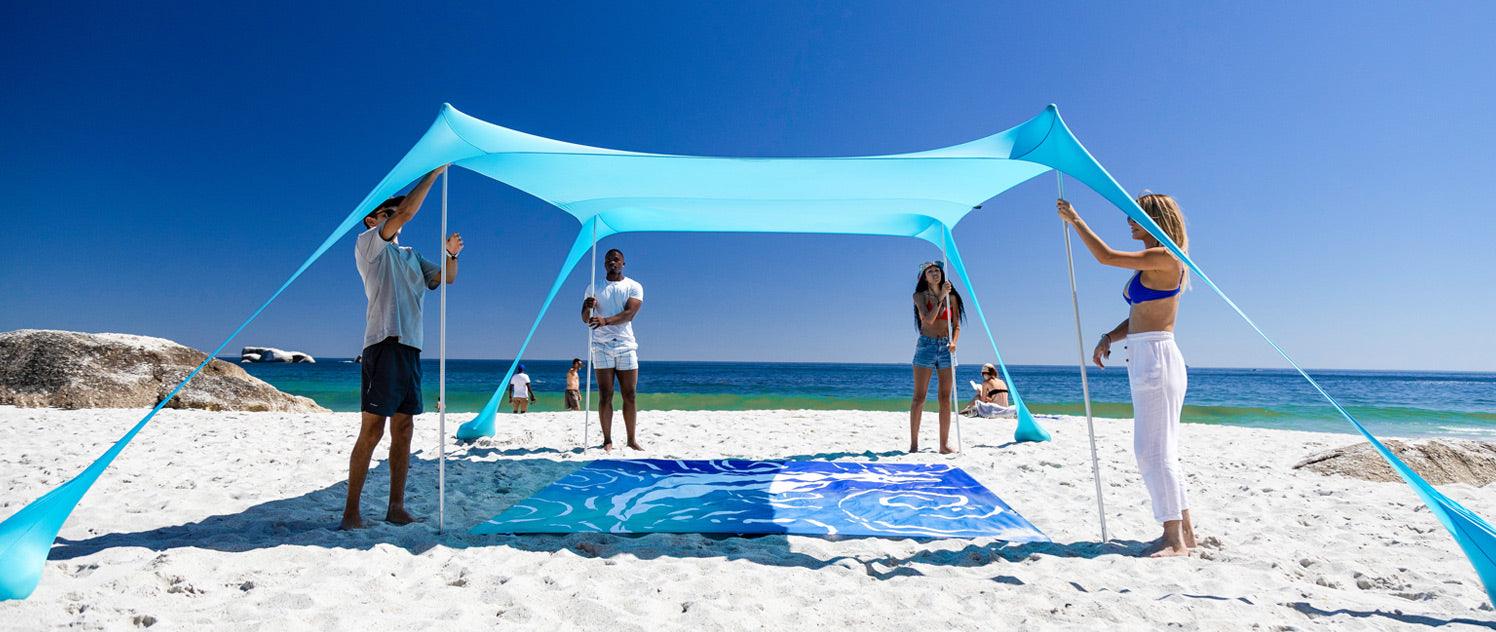
Low-profile designs tend to do better than tall, boxy tents. The more surface area the wind can grab, the more force gets pushed into the frame and anchor points. That’s why many beach-specific shade systems feel more open and stretched out than traditional camping tents. They’re made for airflow, sun coverage, and sand anchoring rather than total enclosure.
The best options also rely on sandbags or deeply secured anchors instead of flimsy stakes alone. Regular tent stakes can struggle in loose, dry sand, especially when gusts pick up. A beach shelter with anchor systems built specifically for sand has a clear advantage.
A lot of beach tents are really just lightweight pop-up shelters with beach branding. They may be quick to unfold, but quick setup does not automatically mean strong performance.
The usual failure points are predictable. Weak poles bend under pressure. Small anchor points shift loose. Fabric panels catch too much wind. And if a tent only stays stable when every setup step is perfect, it may not be the right choice for a real family beach day.
That doesn’t mean every fully enclosed tent is bad, or that every open canopy is great. It depends on the type of beach, the wind direction, how many people need shade, and how long you plan to stay. But if wind is your main concern, stability should come before full privacy or maximum wall coverage.
The easiest way to shop smarter is to ignore vague words like “durable” and focus on features that actually affect performance.
This is the big one. A beach tent made for windy conditions should have anchor systems that perform well in loose sand, not just compact ground. Sand pockets, fillable anchor bags, and reinforced corner points usually hold better than basic pegs.
A wider anchor footprint also helps. When tension is spread across multiple points, the shelter resists lift more effectively. That translates to fewer mid-day adjustments and a more relaxed setup once everything is locked in.
Loose fabric is trouble. When material flaps, wind gets under it, pushes upward, and creates instability. The best beach tent for wind should allow the canopy to be pulled tight so it sheds gusts more cleanly.
This is one reason stretchy, flexible canopy systems can work so well on the beach. They allow tension to be adjusted depending on the conditions. On a calm day, you may want a looser, more relaxed setup. On a windy day, tighter lines and a lower angle can make a big difference.
Heavier does not always mean better. On the beach, smart flexibility often beats stiff weight. Poles that can bend slightly under pressure are less likely to snap or fail abruptly in gusty weather.
Aluminium support structures are common in beach shelters for a reason. They absorb movement better than overly rigid systems. The trade-off is that not every lightweight frame will feel equally premium in hand, so build quality still matters.
Wind stability is the priority here, but shade quality still counts. A shelter that survives the breeze but barely protects you from direct sun is not doing the full job.
Look for UPF 50+ fabric and enough shaded space for how you actually use the beach. A couple may need room for two chairs, a cooler, and bags. Families usually need more coverage for kids, towels, snacks, and all the extra gear that somehow multiplies by noon.
A beach tent can have excellent wind features and still be frustrating if setup is complicated. The best designs are simple enough to pitch quickly before the wind gets stronger.
That is especially important if you arrive with kids, a surfboard, or an armload of gear. A shelter should reduce stress, not add another task to manage. Easy setup is not a bonus. It is part of real-world performance.
If you’re comparing styles, beach canopies often outperform traditional pop-up tents in breezy conditions because they are designed around sand anchoring and airflow. They usually offer more open space, better ventilation, and less trapped heat.
Pop-up tents can still work well when you want more enclosure or a little privacy for changing, napping, or keeping babies out of direct sun. But that added coverage can become a downside in stronger wind. More enclosed walls mean more resistance, and more resistance means more stress on the frame.
For many beachgoers, the sweet spot is an open-sided shelter with reliable anchors, adjustable setup angles, and enough room to lounge without feeling boxed in. That kind of setup tends to feel breezy, practical, and easier to trust when the forecast is not perfect.
Even a strong beach tent needs the right setup. Angle matters. Tension matters. Anchor fill matters. If the anchor bags are only half full or the canopy is sitting too high, performance drops fast.
Try to set up your shelter with one lower side facing into the wind if the design allows it. Fill anchor bags completely with sand and bury them well when recommended. Tighten all lines after the fabric settles for a minute or two. Small adjustments early can save you a lot of hassle later.
It also helps to avoid setting up too close to open wind channels near dunes, walkways, or gaps between crowded shelter rows. A spot that looks convenient can sometimes catch stronger gusts than the rest of the beach.
There’s a difference between a shelter that sounds impressive and one that fits your real beach routine. If it is too heavy, too fiddly, or too annoying to pack, it may stay in the trunk or the garage. That is not a great buy, no matter how good the materials sound.
The right choice usually blends three things: dependable anchoring, easy portability, and enough shade to make the day comfortable. For most casual beachgoers, that combination beats overbuilt complexity every time. You want a shelter that feels ready for family trips, surf checks, park hangs, and spontaneous weekend escapes - not one that feels like a project.
That’s why beach-focused shade systems often make more sense than generic outdoor tents. They’re built around the actual problems beach days create: sun exposure, shifting sand, gusty conditions, and the need to get set up fast so the fun part can start. Brands like Sun Ninja lean into that sweet spot with lightweight, beach-ready shelter designs that prioritize portability and practical protection.
When you’re choosing the best beach tent for wind, think beyond the product label. Think about the beach you go to, the people you go with, and how much effort you want setup to take. The best shelter is the one that lets you stop wrestling with gear and get back to what you came for - shade, breeze, and a day that feels easy.
Share:
The Best Beach Tent
UPF 50 Beach Shade: What to Look For